
Stinging insects we treat
- Paper wasps. Open, umbrella-shaped nests under eaves, porch ceilings, railings and grills.
- Yellowjackets. Often nest in the ground, in shrubs or inside wall voids. Very defensive, especially in late summer and fall.
- Bald-faced hornets and European hornets. Large paper nests in trees, shrubs, sheds and attics.
- Mud daubers. Mud tube nests on siding and under eaves. Rarely sting, but the nests are a nuisance.
We also offer carpenter bee treatment for the round holes they drill in decks, fascia and siding.
From a recent service call
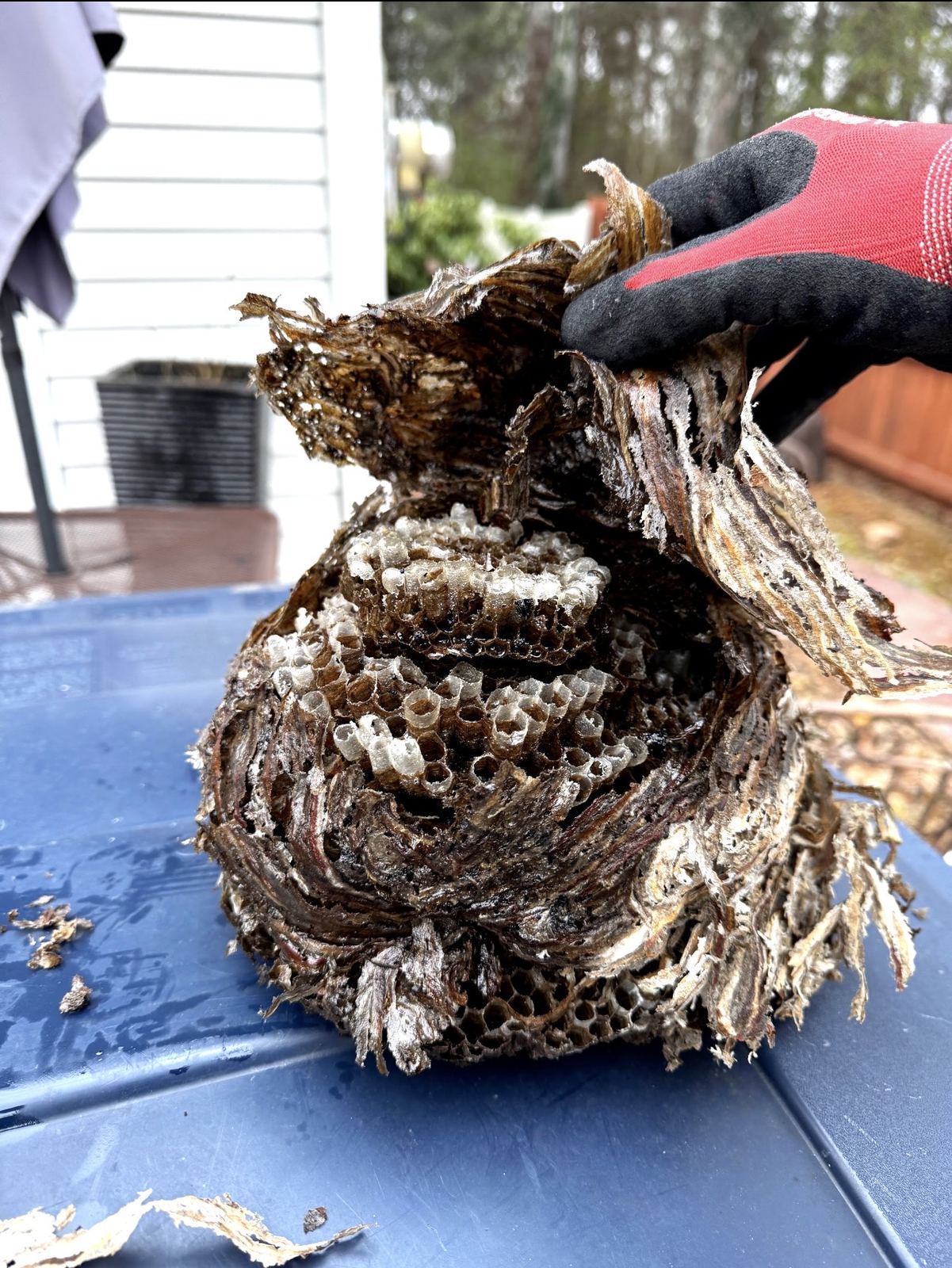
Why you shouldn't knock it down yourself
Yellowjackets and hornets defend their nest as a group and can sting over and over. Spraying or knocking down a nest without the right equipment often leads to multiple stings, and nests in walls or the ground are usually bigger than they look. If anyone in your home is allergic to stings, keep everyone away from the nest and call us.
How our wasp and hornet service works
We find the nest and identify what's living in it. We treat the nest directly so the colony dies off, then remove it when it's safe to do so. For nests hidden in walls or the ground, we treat the entry point. We'll also point out spots around your home where new nests are likely to start.
If it turns out to be honeybees, we'll let you know and recommend a local beekeeper who can relocate them.
Help prevent new nests
- Check eaves, porch ceilings, railings and play sets in spring when queens start new nests
- Keep trash cans closed and clean up spilled drinks and food outdoors
- Fill holes in the ground and seal gaps in siding and soffits
- Don't swat at wasps. Walk away calmly instead
Common questions
When are wasps and yellowjackets the worst?
Nests start small in spring and grow all summer. Yellowjackets are at their largest and most aggressive in late summer and early fall, which is when we get the most calls.
Can I wait until winter for the nest to die off?
Most paper wasp and hornet colonies die off after a hard freeze, but that leaves months of sting risk. If a nest is near a door, walkway or play area, it's safer to treat it now.
Do you treat ground nests and nests inside walls?
Yes. These are some of the most dangerous nests to deal with yourself because they're often much bigger than the entrance suggests. We treat them at the entry point.
Do you kill honeybees?
No. If we find honeybees, we'll let you know and recommend a local beekeeper who can safely relocate them.