
Spiders common in Southeast Tennessee
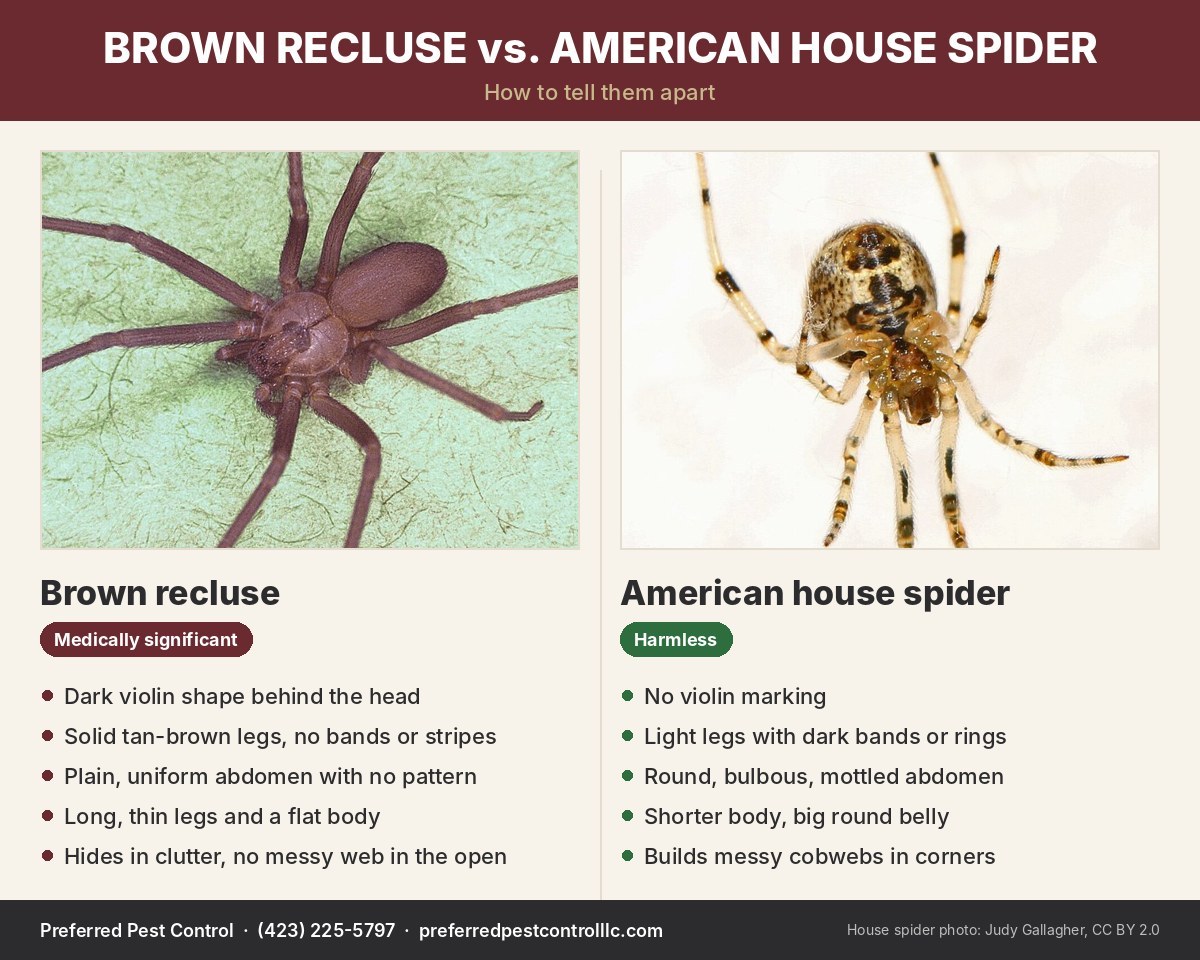
- Brown recluse. Tan to brown with a dark violin shape behind the head. Hides in closets, attics, basements, boxes and clothing. Its bite can cause a serious wound.
- Black widow. Shiny black with a red hourglass under the belly. Found in woodpiles, sheds, crawl spaces, meter boxes and under outdoor furniture.
- Brown widow. Tan to brown with an orange hourglass under the belly and spiky, round egg sacs. Common around outdoor furniture, grills, mailboxes and railings. Its bite is usually milder than a black widow’s.
- Joro spider. An invasive orb weaver from East Asia that has spread into the Chattanooga area. Large yellow-and-blue-black females build huge golden webs on porches, eaves and trees in late summer and fall.
- Wolf spiders. Large, fast and hairy. Hunt on the ground and wander in from the yard, especially in fall.
- House and cellar spiders. Build messy webs in corners, basements and garages.
- Orb weavers. Spin big round webs on porches, eaves and shrubs in late summer.
Know the spiders around your home
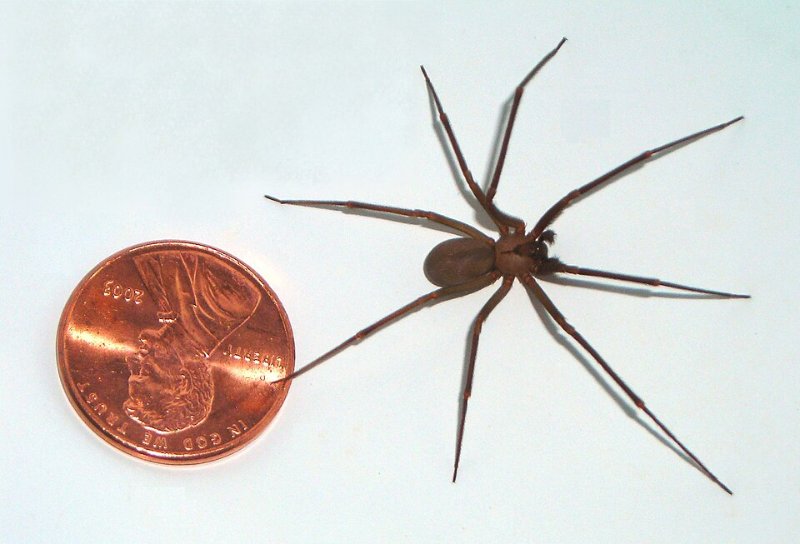
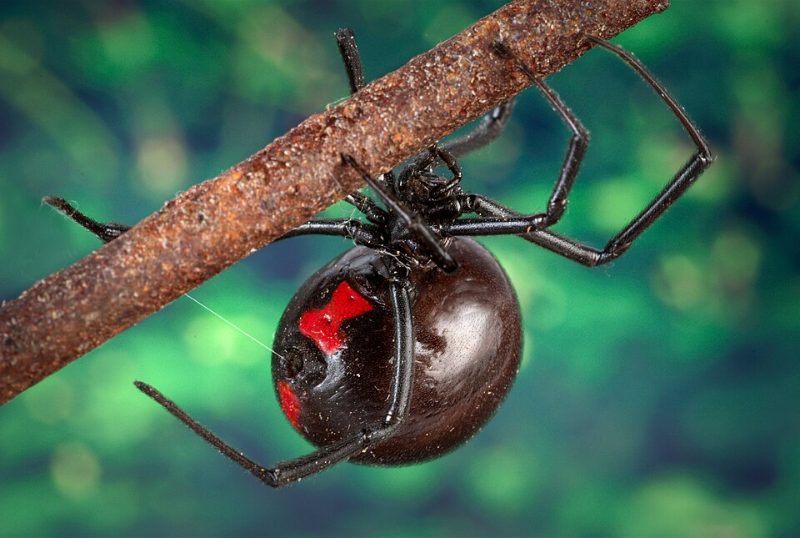
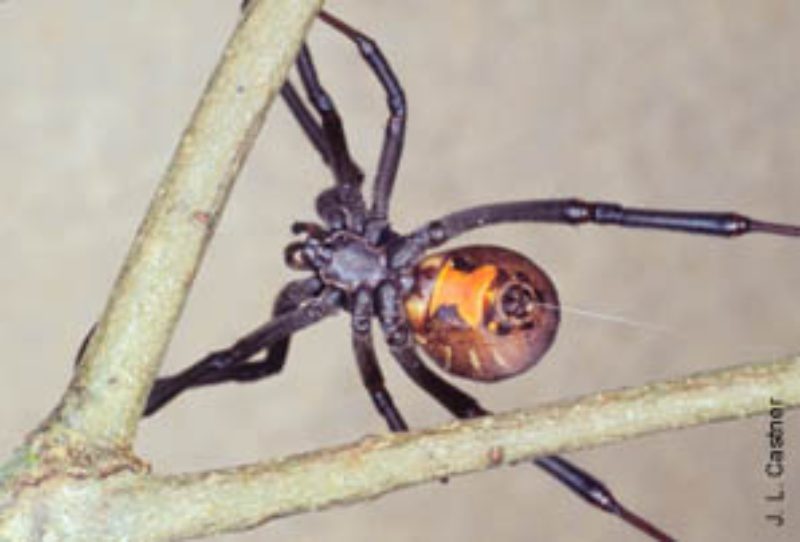
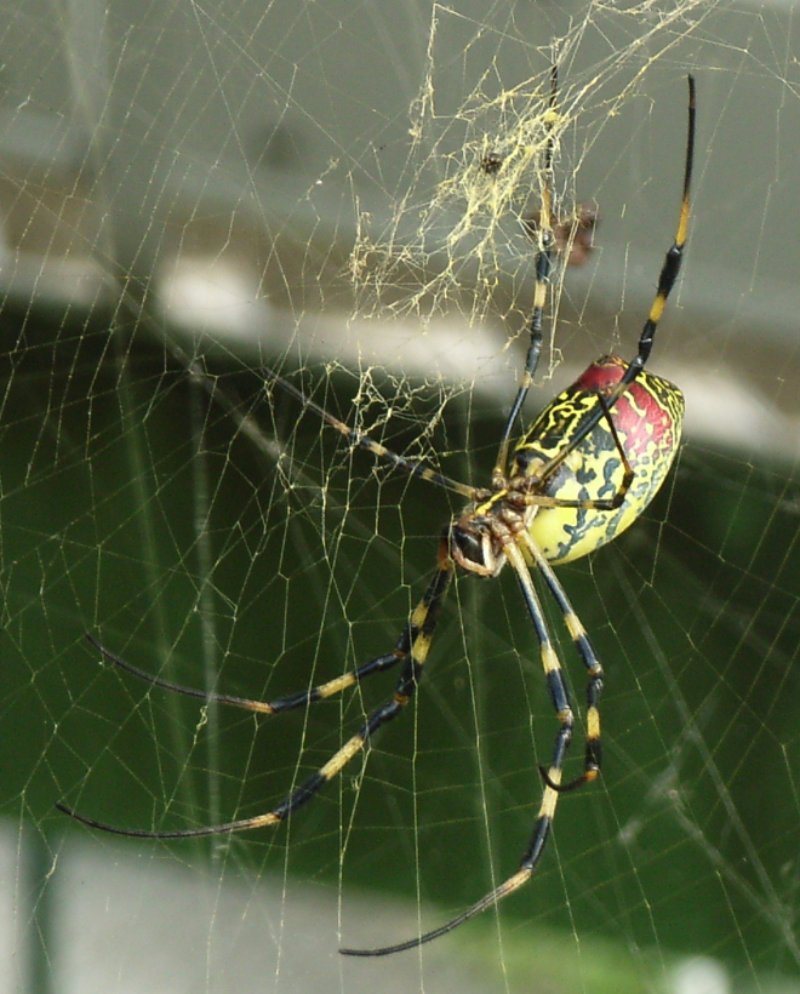
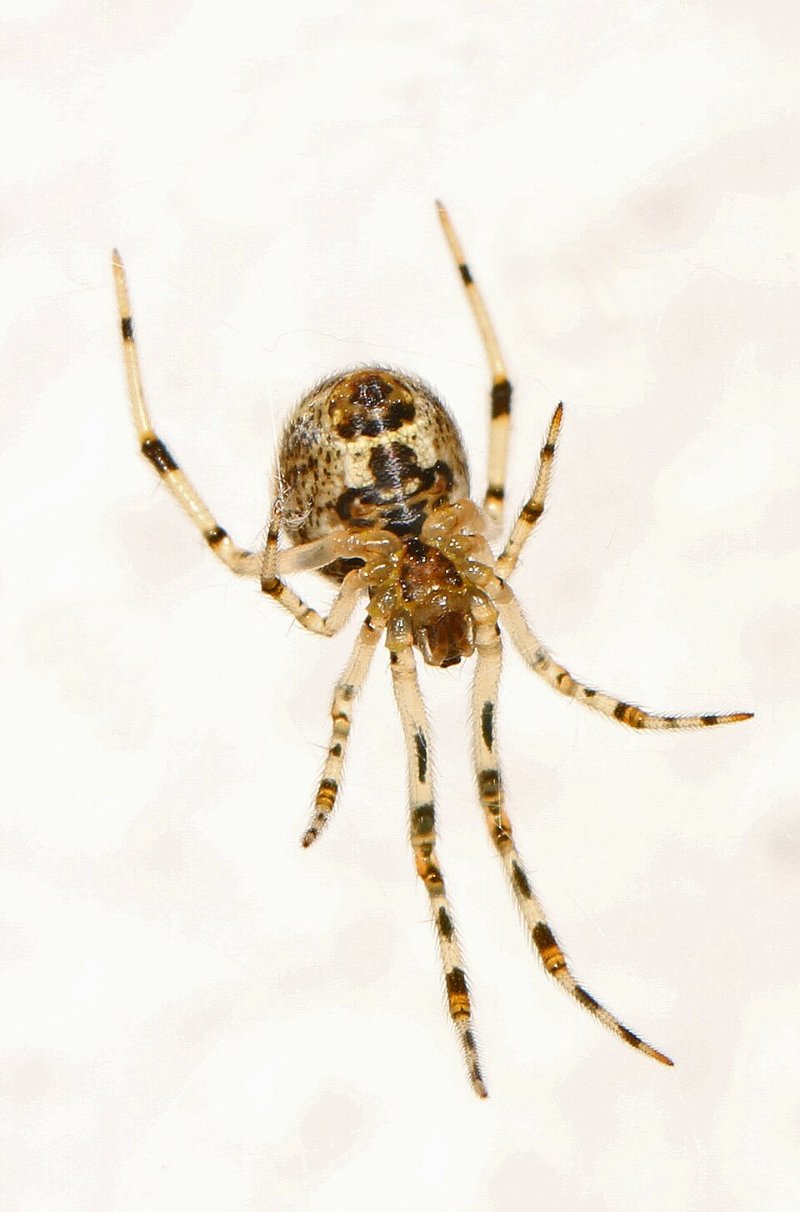
Photos via Wikimedia Commons. American house spider photo: Judy Gallagher, CC BY 2.0. Others public domain or CC0.
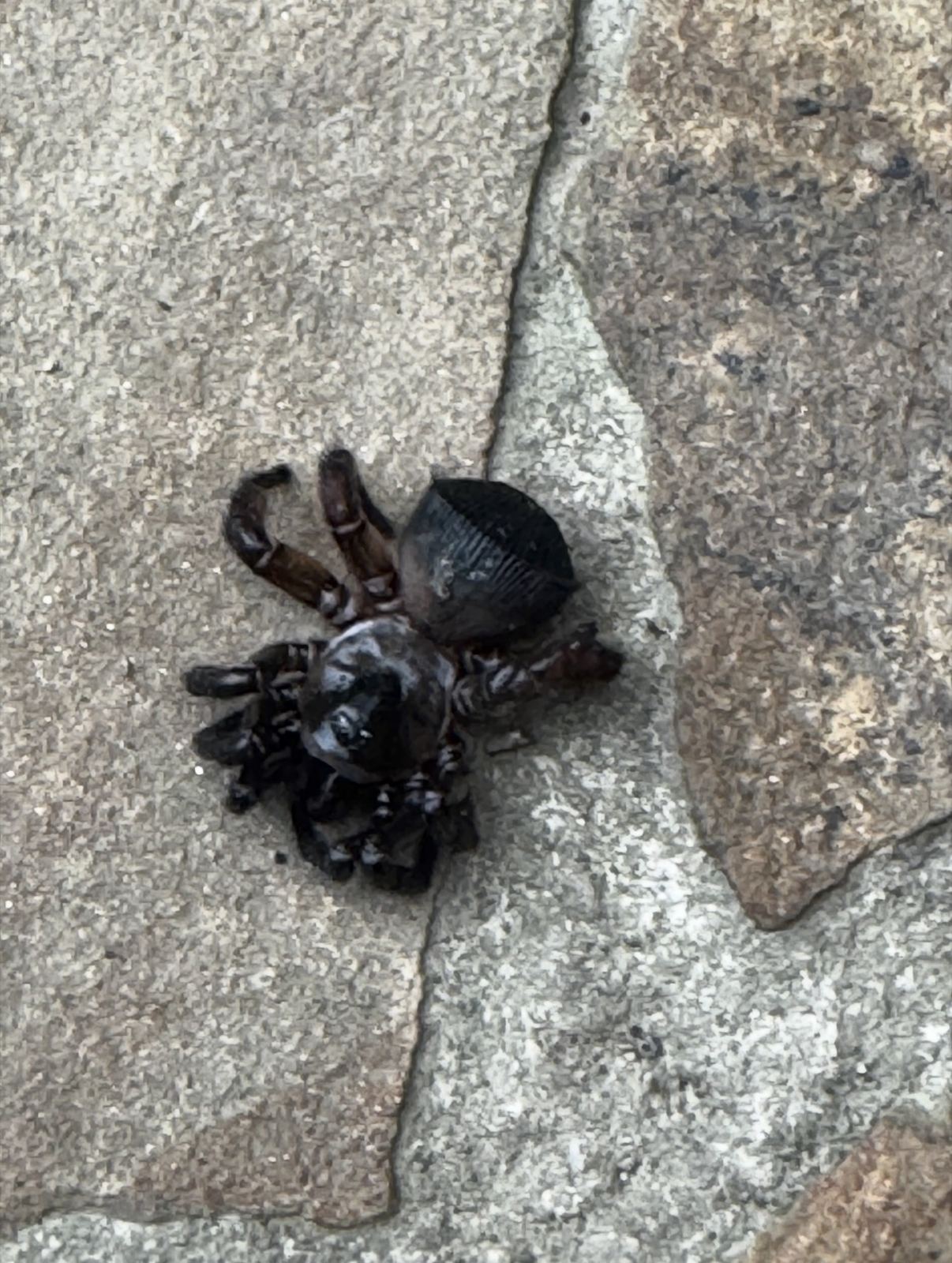
From a recent service call
How we control spiders
Spiders follow their food, so we treat for both. We sweep away webs and egg sacs around eaves, windows, porches and entryways, treat the cracks and corners where spiders hide, and treat the perimeter of your home to cut down on the insects they feed on. Inside, we focus on basements, garages, closets and crawl spaces.
Household spiders are covered on all of our service plans.
Joro spiders
Joro spiders are an invasive orb weaver from East Asia. They first showed up in north Georgia around 2013 and have since spread into the Chattanooga area and Southeast Tennessee. They're hard to miss: females have bright yellow and blue-black striped bodies, legs that can span three to four inches, and they spin huge, golden-tinted webs that can stretch several feet across porches, eaves, decks, trees and power lines.
- Most noticeable from August through November
- Webs are often layered and several feet wide
- Common on porches, eaves, decks, fences and trees
- Adults die off after the first hard frost, but egg sacs survive the winter
Are joro spiders dangerous?
Not to people or pets. Their venom isn't considered a threat to humans, and they rarely bite. The real problem is the webs: big, sticky webs across doors, walkways and porches, coming back every fall.
How we get rid of joro spiders
- Knock down webs and spiders around doors, porches, eaves, decks and walkways
- Treat the spots where they anchor webs on your home, like eaves, soffits, railings and light fixtures
- Treat the perimeter to cut down on the flying insects they feed on
- Remove egg sacs we find on your home in late fall and winter, so fewer spiders hatch in spring
- Follow up during peak season, since new webs go up quickly in September and October
Brown recluse spiders
Brown recluses are common in our area and can be stubborn, because they hide deep in clutter and wall voids and can go a long time without eating. We place glue monitors to see where they're active, treat their hiding spots, and help you cut down on the clutter they live in. Most homes see a big drop in activity with regular service.
Many spiders people find in the house are mistaken for brown recluses. Here's how to tell a recluse from the harmless American house spider:
Spiders on your boat dock?
Dock lights pull insects off the water, and spiders follow. Docks and boathouses have their own service. See boat dock spider control.
Cut down on spiders around your home
- Clear clutter from closets, basements, garages and attics
- Store items in sealed plastic bins instead of cardboard boxes
- Shake out shoes, gloves and clothing that have been sitting
- Keep firewood and debris away from the house
- Switch porch lights to yellow bulbs, which draw fewer insects
Common questions
Are spiders covered on my service plan?
Yes. Household spiders are covered on all of our service plans. Boat docks and boathouses are a separate service.
Can you get rid of brown recluse spiders?
We can greatly reduce them. Brown recluses hide well and take steady treatment, so we use monitors to track activity and keep treating until it drops off.
Why do I see more spiders in the fall?
Male spiders wander looking for mates in late summer and fall, and cooler weather pushes some inside. That's why fall is a good time to have your perimeter treated.
Should I worry about a spider bite?
Most spider bites are harmless. If you think you've been bitten by a brown recluse or black widow, or a bite gets worse, see a doctor.
Are joro spiders dangerous?
No. Joro spiders aren't considered a threat to people or pets and rarely bite. Their large webs are the main nuisance.
When do joro spiders go away?
Adult joro spiders die after the first hard frost, usually in November. Their egg sacs survive the winter, so removing them helps cut down on next year's spiders.