
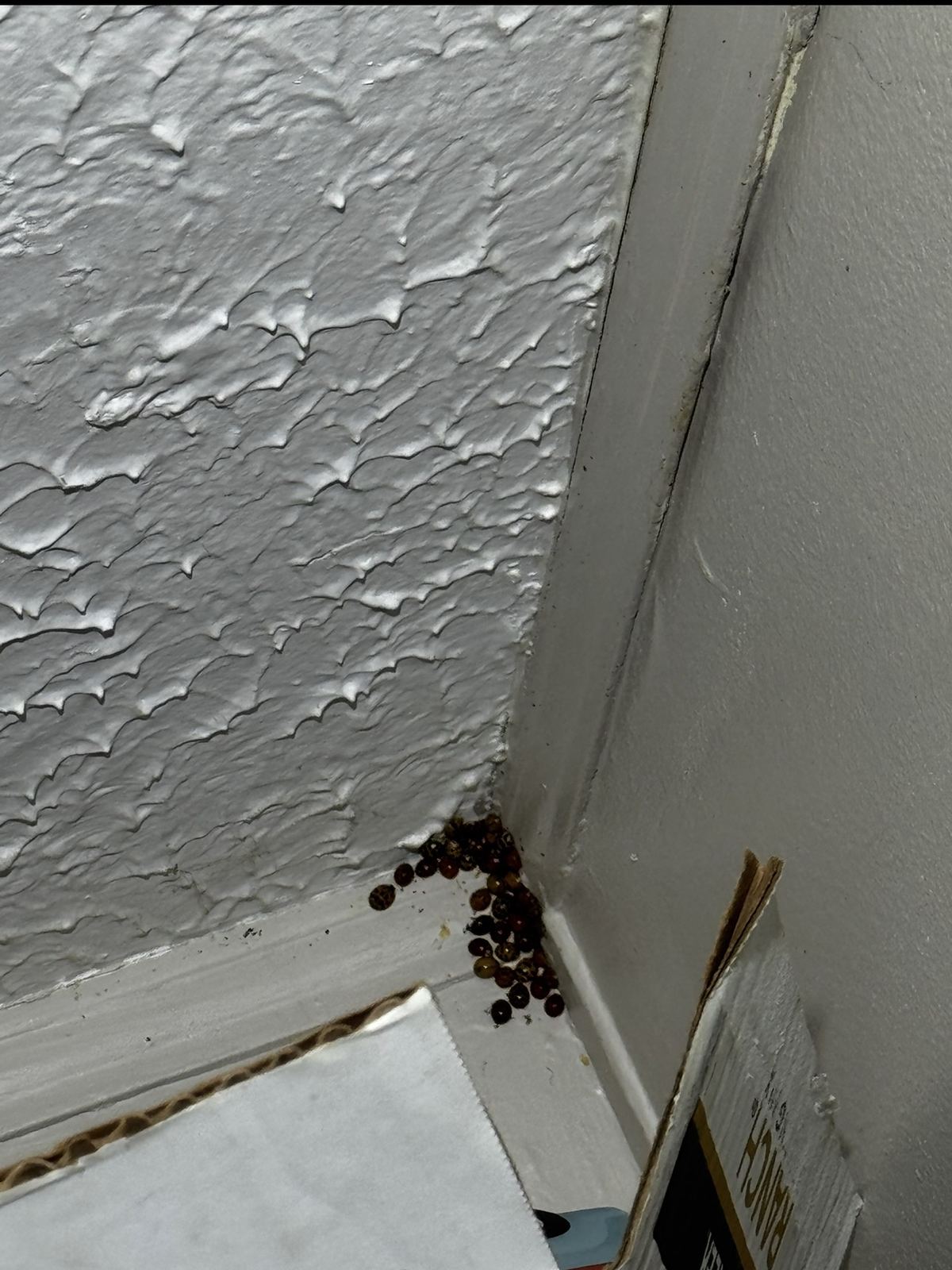
Every October, the same calls come in from around Chattanooga. The south side of the house is covered in bugs. There are lady beetles in the window sills, stink bugs on the curtains, and something stinks when you try to get rid of them.
These are occasional invaders: outdoor insects that move into homes in the fall to wait out the winter. They don't eat your food or damage your house, but they're a real nuisance. Here's what's going on and what actually works.
Meet the usual suspects
- Brown marmorated stink bugs: brown, shield-shaped and about the size of a fingernail. They give off a strong odor when disturbed or crushed, and they're now found all across Tennessee.
- Asian lady beetles: they look like ladybugs but range from orange to red, with or without spots. They gather by the hundreds on sunny walls, can leave yellow stains and occasionally give a small bite.
- Boxelder bugs: black with red-orange markings. They cluster on warm walls, especially near boxelder and maple trees.
- Millipedes: small, dark and many-legged. They wander in from damp mulch and leaf litter in the fall and spring, and usually die within a few days indoors.
- Camel crickets: humpbacked, long-legged crickets that like cool, damp basements, crawl spaces and garages.
Why they show up in the fall
As nights get colder, these insects look for a protected place to spend the winter. On warm, sunny afternoons after a cool night, stink bugs and lady beetles gather on the south- and southwest-facing walls of homes, where the sun warms the siding.
From there, they slip through small gaps around windows, doors, siding, vents and utility lines. Many settle into attics and wall voids. On warm winter days, and again in early spring, they wake up and follow the light into your living space. That's why some homeowners see them indoors months after the fall rush.
Are they dangerous?
For the most part, no. Stink bugs don't bite and don't damage your home. They also don't breed indoors. They spend the winter inside, then head back outdoors in the spring.
Lady beetles can give a small pinch and leave stains on walls and fabrics. Pets that eat them can get mouth irritation. Some people are sensitive to these insects, so if large numbers are getting inside, it's worth dealing with.
How to get rid of the ones already inside
- Vacuum them up. This is the best way to handle a crowd. Slip a knee-high stocking into the vacuum hose and hold it in place with a rubber band so the bugs (and the smell) don't end up inside your vacuum. Then tie off the stocking and throw it away outside.
- Don't crush them. Crushing stink bugs and lady beetles releases their odor and can stain surfaces.
- Skip the bug bombs. Foggers and store-bought sprays don't reach the cracks and gaps these bugs hide in, so they don't give lasting control. A targeted crack-and-crevice treatment does.
How to keep more from getting in
- Caulk gaps around windows, doors, siding, utility pipes and chimneys
- Add or replace door sweeps and weatherstripping
- Repair torn window screens and screen attic and exhaust vents
- Switch outdoor bulbs to yellow "bug lights," which draw fewer insects
- Pull mulch and leaf litter back from the foundation to cut down on millipedes
- Run a dehumidifier in damp basements to make them less inviting to camel crickets
Timing matters
An outside treatment works best when it's in place just before these bugs start gathering, usually in late September and early October. The treatment breaks down in sunlight within a week or two, so timing is everything.
If they're already on your walls, it's not too late. An exterior treatment knocks down the ones still gathering outside, and an interior crack-and-crevice treatment takes care of the ones working their way in around windows. Then we can get you on the schedule for next September, before the rush starts.
How Preferred Pest Control handles fall invaders
Occasional invaders are covered under our general pest control service. We hit them from both sides: outside, to keep them dead before they get in, and inside, where the stragglers come through. Here's what to expect:
- A free pest inspection. We find out which insects you're dealing with and where they're gathering and getting in.
- An exterior treatment on the walls, eaves, windows and openings where these bugs gather, so they die outside instead of making it into your home.
- A thorough interior treatment. We treat cracks and crevices around windows, doors and baseboards inside, especially sun-facing windows on the south and west sides, where these bugs get in and collect.
- Seasonal timing. We plan next year's fall treatment so it's in place before the bugs show up.
You'll know who's coming, when they're coming, and what they did. That's how we handle every visit.
Frequently asked questions
Do stink bugs or lady beetles breed inside my house?
No. They come inside to wait out the winter, then head back outdoors in the spring to feed and lay eggs.
Do you treat inside the house too?
Yes. Along with the exterior treatment, we do a thorough interior crack-and-crevice treatment around windows, doors and baseboards, especially the sun-facing windows where these bugs get in and gather.
Why do they show up again on warm winter days?
Many spend the winter in attics and wall voids. When the sun warms the walls, they wake up and wander toward the light, which often means into your living space.
Seeing bugs on your walls?
If stink bugs or lady beetles are piling onto your house, give us a call. Preferred Pest Control serves homeowners in Chattanooga, Cleveland, Ooltewah, Collegedale, Hixson, Signal Mountain and the surrounding area, and pest inspections are always free.

Jacob Richardson owns Preferred Pest Control, a locally owned, licensed and insured pest control company serving Southeast Tennessee (TN Charter #6117). More about us